-
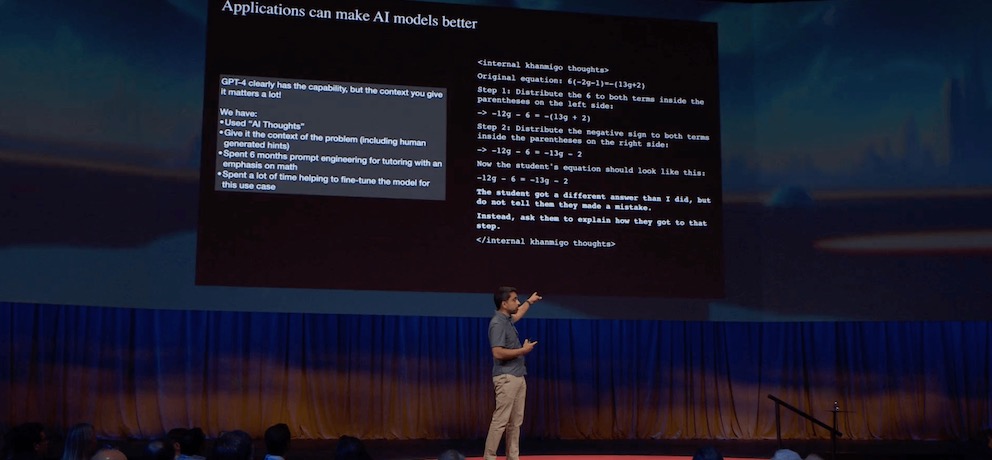
Revolutionizing Education through AI-Powered Personalized Learning
Sal Khan, the founder of Khan Academy, argues that the integration of artificial intelligence (AI) in education has the potential to bring about the most significant positive transformation ever seen in the field. While concerns about AI facilitating cheating and undermining learning exist, Khan emphasizes that with the right guardrails and strategies in place, these
-

Duolingo Utilizes AI for Faster Lesson Creation
The language learning platform, Duolingo, has harnessed the power of artificial intelligence (AI) – specifically a Large Language Model (LLM) – to revolutionize lesson creation. By leveraging AI, Duolingo can generate vast amounts of lesson content with the click of a button, making the process faster and more efficient.
-

What Characteristics in Chatbots Work Best?
Richard Mayer, one of the world’s most-cited educational researchers, is studying what kind of computer-generated voices and images are most engaging to learners and lead to the best outcomes.
-

Skills Gained Is the Ultimate Outcome
The push for skills-based education faces challenges in terms of defining and measuring skills effectively. Implementing this approach on a large scale requires significant time and effort, as it involves rethinking existing structures and systems.
-

Can Humans and AI Coexist?
The authors, MIT economists Daron Acemoglu and Simon Johnson, argue that the current path of AI development is not conducive to shared prosperity or democracy. They believe that instead of trying to replace humans with AI, the focus should be on making machines useful to people and creating technologies that generate marginal productivity gains, leading

EdTech Thought
The most popular education and technology feeds from around the web.
Footer
Want more links?
Feel free to share any resources you may have that you’d like to see on this list, and we’ll consider them.